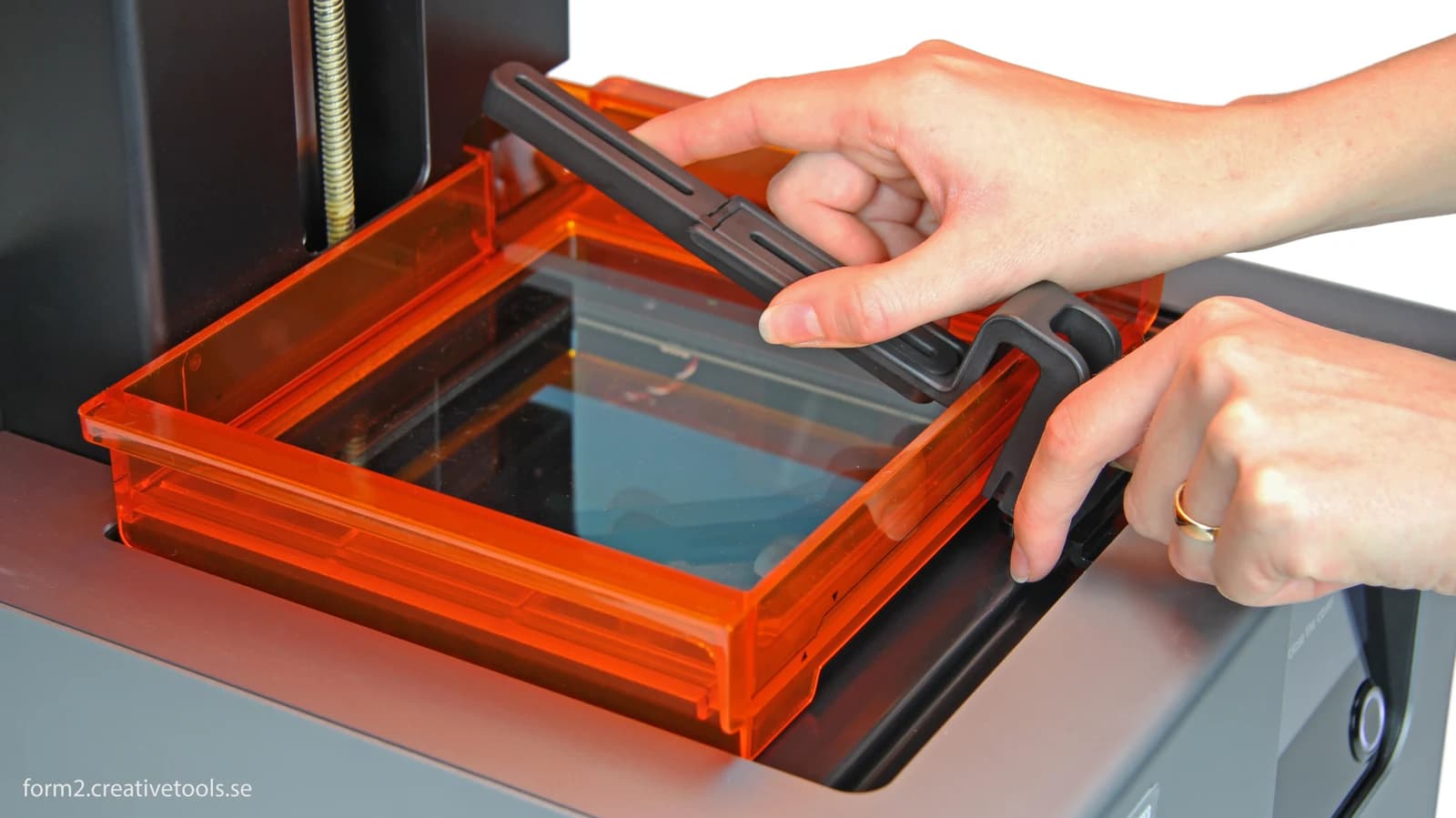
Picture:Creative Tools · CC BY 2.0
Message summary
What happened
Formlabs announced a new generation of Tough series SLA materials on November 13, 2025, including Tough 1000 and the updated Tough 2000, and introduced them together with Tough 1500. Manufacturers emphasize the differences in mechanical performance and application of different materials; these introductions are not a substitute for independent verification of specific products.
Co-creator observation: Break down “making a prototype” into specific tasks
To show appearance, check assembly and test function, the prototypes required may not be of the same material. Appearance parts pay attention to color, texture and seams; assembly parts pay attention to size and coordination; functional parts also pay attention to stress mode, deformation and use environment. Mixing these tasks together can easily lead to a situation where the sample looks good but the problem cannot be verified.
Take the buckle as an example. Just because it has been assembled once does not mean that it remains stable after repeated disassembly and assembly. Material, print orientation, post-cure and local structure all affect the results. We recommend that you first clarify the number of times and phenomena that need to be verified, and then decide on the production plan.
When confirming materials, leave at least three types of records
The first category is the material name, batch and processing conditions to avoid subsequent reproducibility. The second category is key dimensions and inspection results to facilitate comparison of different versions. The third category is the actual test process, including assembly sequence, load or temperature conditions, and abnormal locations.
After the sample is passed, it cannot be directly inferred that the exact same results will be obtained if the injection molding material is used. Shrinkage, wall thickness and mold structure in mass production processes still need to be evaluated. The value of prototypes is to discover problems in advance, rather than hiding unverified risks.
Source of information
Formlabs · 2025-11-13
Formlabs Unveils Next-Generation SLA Materials That Rival Traditional Thermoplastics ↗The public information summary and the co-creator’s editorial observations are presented separately, and the full text is not reproduced. Technical suggestions need to be verified in conjunction with specific projects; the accompanying pictures do not mean that the company participates in the mentioned events or holds the mentioned equipment.
Have specific product ideas?
Bring physical objects, drawings or requirements and decide together what to do next.
Project consultation ↗